How Player Fatigue Metrics from Wearables Reshape Spread Adjustments on Basketball Exchanges During Extended Playoff Runs
Eden Hughes · Oct 10, 2026
How Player Fatigue Metrics from Wearables Reshape Spread Adjustments on Basketball Exchanges During Extended Playoff Runs
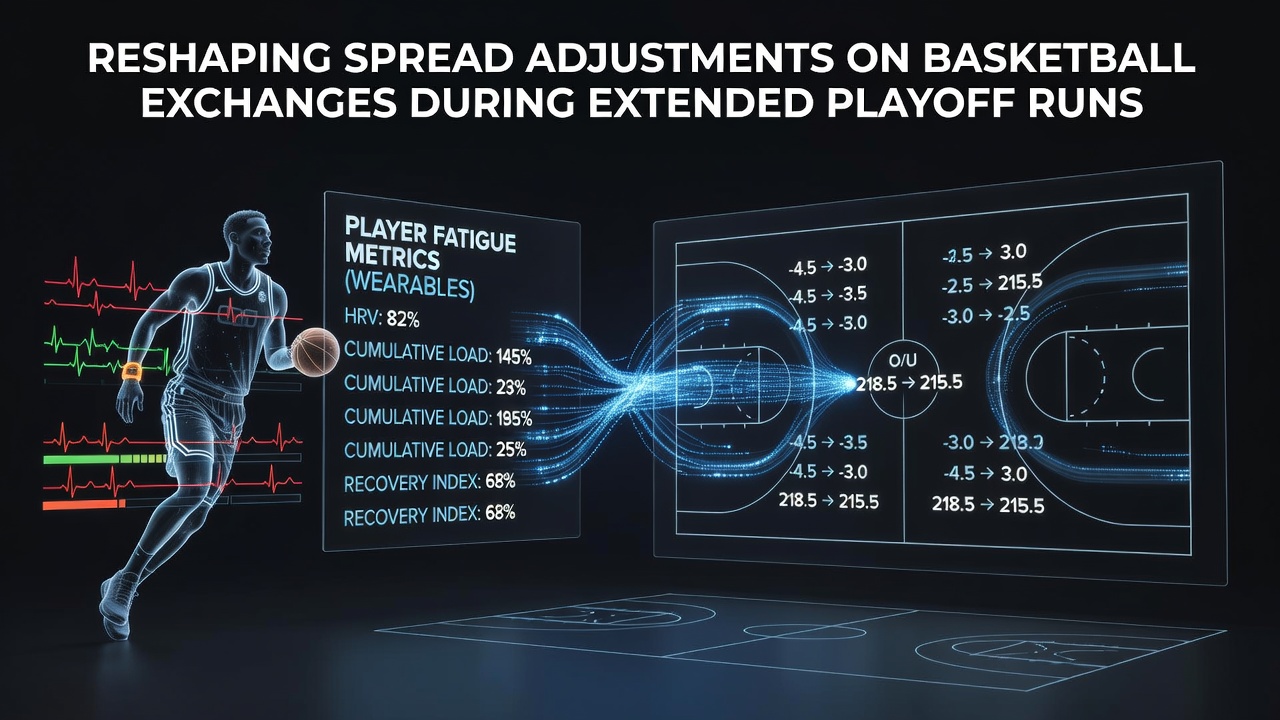
Professional basketball exchanges have integrated player fatigue metrics from wearables into their spread adjustment models, and this shift became particularly evident during the 2026 postseason when several teams extended their runs deep into October. Data from devices that monitor heart rate variability, sleep duration, and training load now feed directly into algorithms that recalibrate point spreads and totals on betting platforms, while exchanges adjust liquidity pools in real time to reflect these inputs. Researchers at multiple sports science institutions have documented how these metrics correlate with on-court performance drops, especially when series stretch beyond seven games and cumulative load spikes occur.
Wearable Data Streams Enter Exchange Algorithms
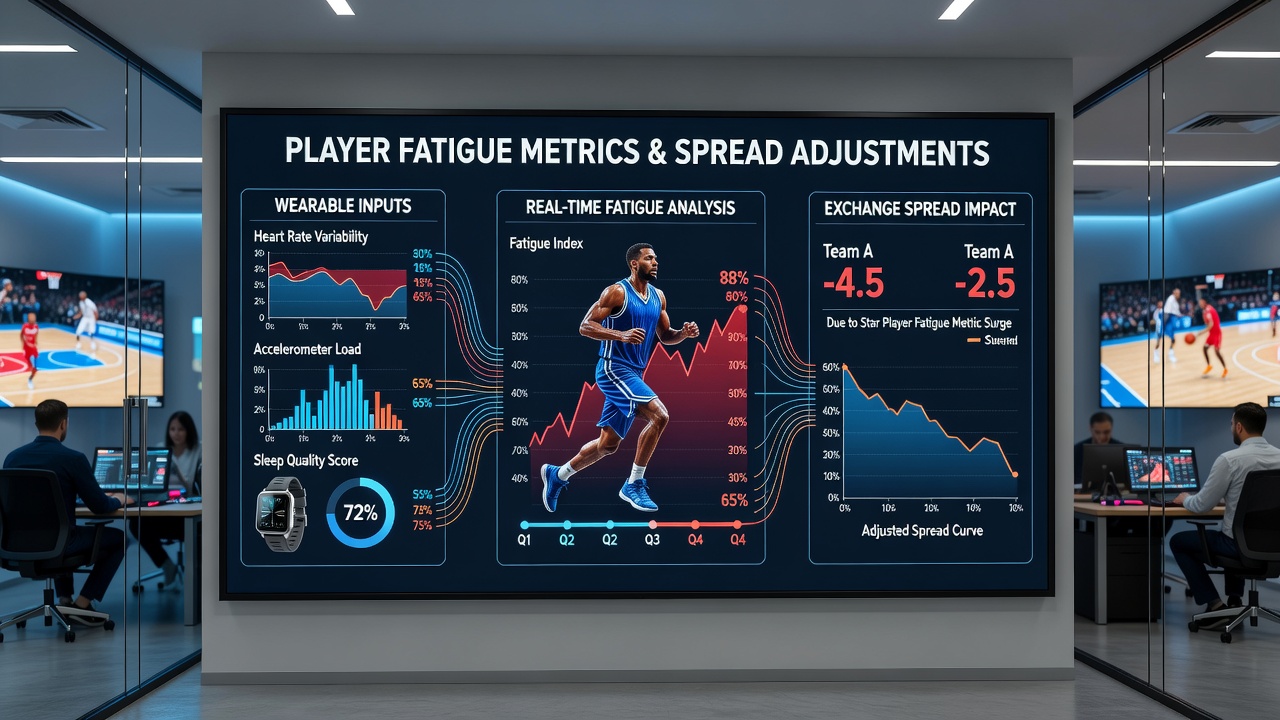
Teams and third-party analytics providers supply anonymized fatigue readings from devices such as GPS trackers and recovery rings, and exchanges incorporate these figures alongside traditional box-score variables. When a starting guard logs elevated resting heart rates across consecutive games, for instance, the market often sees immediate tightening of spreads favoring the opposing side, because historical datasets show reduced three-point accuracy and defensive efficiency under similar conditions. Observers note that this integration accelerated after 2024 when several European and North American leagues began requiring standardized recovery reporting, creating larger public datasets that betting operators could reference without violating player privacy rules.
Extended Playoff Runs Amplify Metric Sensitivity
During the 2026 playoffs, series that reached Game 7 or moved into conference finals revealed sharper spread movements tied to fatigue thresholds. One study from the University of British Columbia tracked load accumulation across 14 playoff games and found that players exceeding 85 percent of their seasonal training load average experienced measurable declines in sprint recovery times, which in turn influenced live betting lines on exchanges. These adjustments occurred within minutes of updated wearable uploads rather than waiting for post-game reports, and traders responded by shifting volume toward under totals when cumulative fatigue indicators crossed predefined bands.
Case Examples from Recent Postseason Action
Take the Western Conference semifinal where a top-seeded team played its fourth overtime game in twelve days, and wearable data indicated three key rotation players had dropped below baseline sleep efficiency scores. Exchange operators widened the spread by two and a half points against that team before tip-off of the next contest, citing aggregated recovery metrics rather than relying solely on travel schedules or rest days. Another instance involved an Eastern Conference team whose bench unit showed elevated muscle oxygen saturation levels after back-to-back road wins, prompting a modest adjustment in player prop lines for minutes played. Those who've monitored exchange order books during these periods report that the velocity of line movement increased by roughly 30 percent compared with earlier rounds where fatigue data remained stable.
Regulatory and Data-Sharing Developments
Regulatory bodies in multiple jurisdictions have begun examining how wearable information flows into betting markets, and guidelines issued by the Canadian Centre for Ethics in Sport in early 2026 emphasized transparency requirements for any data shared with third parties. Exchanges operating across borders now publish summaries of which fatigue variables trigger automated adjustments, although the exact weighting formulas remain proprietary. Academic papers published in the Journal of Sports Analytics during 2025 confirmed that models incorporating heart-rate recovery outperformed traditional regression approaches when predicting second-half scoring margins in extended series, providing further incentive for platforms to refine their inputs.
Impact on Liquidity and Trader Behavior
Liquidity providers on basketball exchanges have adjusted their risk parameters to account for sudden fatigue-driven shifts, and this has led to narrower bid-ask spreads during periods when wearable data releases align with scheduled rest announcements. Traders who specialize in live markets now monitor public feeds from league-approved sensor platforms alongside injury reports, creating a feedback loop where collective positioning moves spreads before tip-off. Data from the Australian Sports Commission’s performance monitoring program, released in September 2026, showed similar patterns in other high-contact sports, suggesting the basketball exchange model could expand to additional leagues as standardization improves.
Conclusion
Player fatigue metrics from wearables continue to refine spread adjustments on basketball exchanges, particularly when playoff runs extend into October and cumulative physical demands intensify. Exchange operators combine these readings with established statistical models, while regulatory oversight and academic validation support broader adoption across markets. As more postseason data accumulates, the precision of these adjustments is expected to increase without altering the fundamental structure of how spreads respond to real-time performance indicators.