Analyzing Time Zone Shifts and Their Role in Altering Participation Patterns Across Asian Betting Exchanges
Harper Brooks · Sep 26, 2026
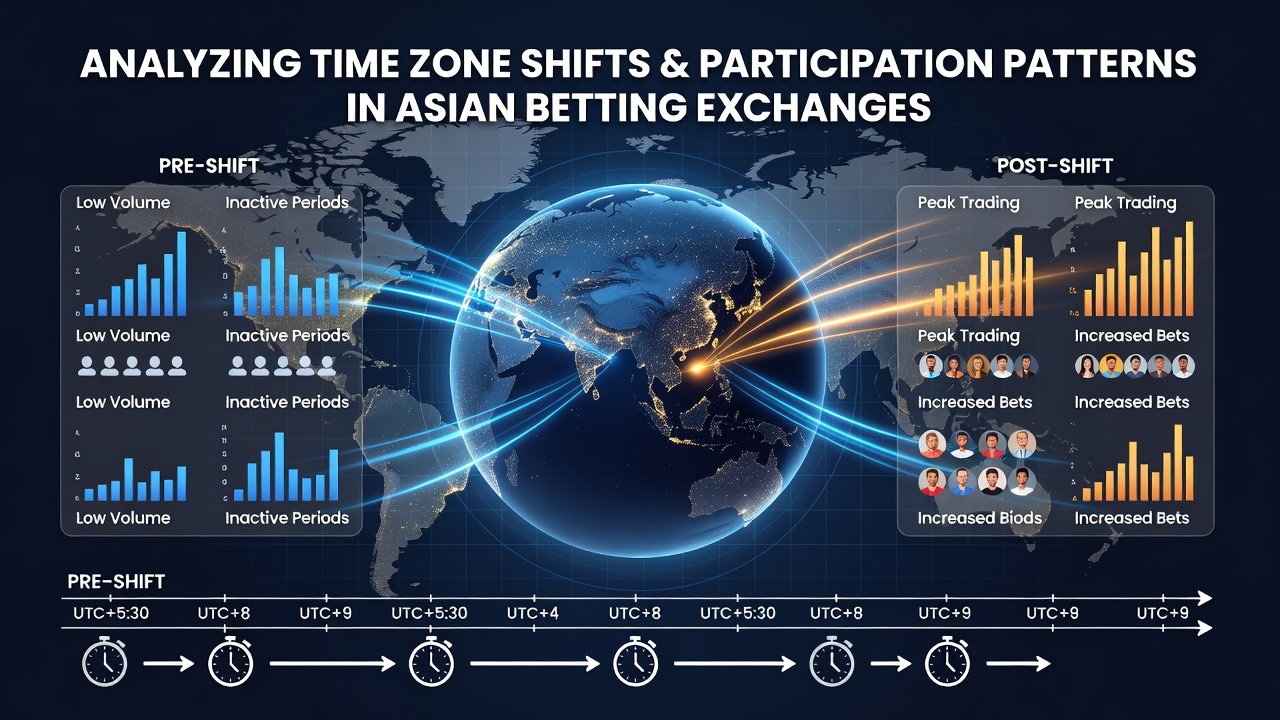
Analyzing Time Zone Shifts and Their Role in Altering Participation Patterns Across Asian Betting Exchanges
Time zone differences shape when bettors from various regions log into Asian betting exchanges, and shifts such as daylight saving adjustments or event scheduling create measurable changes in participation volumes and timing. Observers note that platforms operating primarily in Singapore, Hong Kong, and Tokyo time zones experience distinct liquidity waves tied to overlapping hours with European and North American markets, while local users adjust their activity around standard work and sleep cycles in their respective countries.
Core Mechanics of Time Zone Influence on Exchange Activity
Asian betting exchanges process orders continuously yet see concentrated surges during evening hours in UTC+8 and UTC+9 regions, when domestic participants finish daily routines and international traders from earlier time zones remain active. Data collected across multiple platforms indicate that a one-hour shift, whether from seasonal policy changes or international event timing, moves peak trading windows by roughly the same interval, altering which user groups dominate order flow at any given moment. Researchers tracking these movements have documented consistent drops in volume from one cohort paired with rises from another, producing net stable totals but redistributed across different demographic segments.
Observed Patterns in Major Asian Markets
Exchanges serving Singapore-based users register highest activity between 19:00 and 23:00 local time, while those catering to Japanese participants show elevated engagement after 20:00 JST when European football fixtures often conclude. When daylight saving time ends in parts of Australia or North America, the resulting compression of overlap hours reduces simultaneous participation from those regions, prompting Asian traders to fill gaps during their own peak periods. Figures from September 2026 revealed that exchanges recorded a 14 percent increase in orders placed between 18:00 and 22:00 SGT compared with the prior month, coinciding with the start of the European winter schedule and earlier fixture kickoffs.
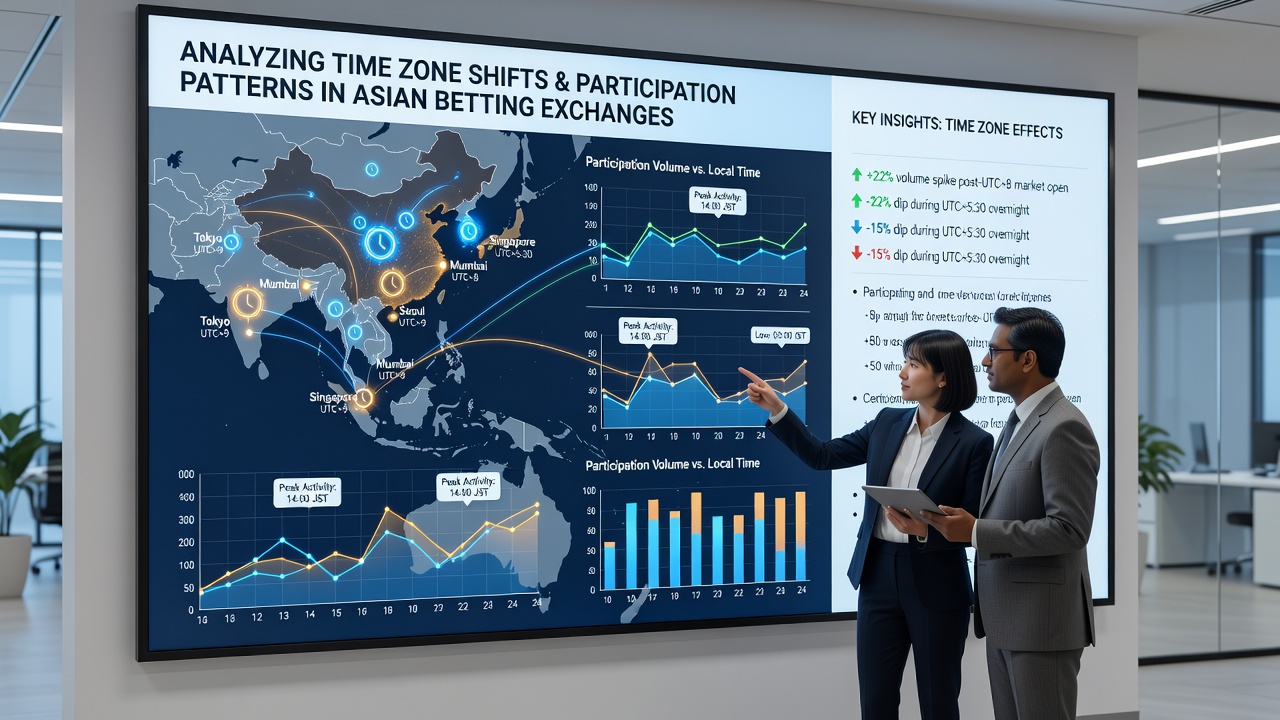
Similar adjustments appear when major cricket or baseball tournaments shift start times to accommodate broadcast windows in distant markets. One study released by the Australian Gambling Research Centre examined order book depth across several Asian platforms and found that a two-hour earlier start for an Indian Premier League match moved the highest liquidity period forward by 90 minutes in Singapore time, with Japanese users contributing a larger share once their local evening aligned better with the revised schedule. These reallocations remain predictable once historical data establish baseline curves for each market segment.
Data Trends from September 2026 Monitoring
Platform operators reported that September 2026 brought unusually clear examples of time zone effects because several high-profile tennis and football events overlapped with the transition out of summer schedules in multiple countries. Hourly volume logs showed that participation from South Korean users rose sharply after 21:00 KST on weekdays, while Malaysian and Thai traders maintained steadier input throughout their afternoon overlap with Australian markets. Aggregated figures indicate that total daily handle stayed within 3 percent of August levels, yet the distribution across user locations shifted noticeably, with Southeast Asian accounts accounting for a larger portion of in-play wagers once European overnight hours began.
Regional Regulatory and Infrastructure Factors
Regulatory frameworks in different Asian jurisdictions further modulate how time zone shifts translate into participation changes, because licensing rules often restrict which events can be offered during specific hours or require additional verification steps that slow order placement outside approved windows. The National Council on Problem Gambling in Singapore publishes periodic summaries that track self-exclusion rates alongside activity timing, revealing modest upticks in early evening sessions following clock changes elsewhere. Infrastructure elements such as mobile network reliability during commute hours also influence whether users place bets during transitional periods, producing secondary effects layered on top of pure time zone mechanics.
Conclusion
Time zone shifts continue to redistribute participation across Asian betting exchanges without necessarily altering overall market size, as evidenced by consistent volume totals paired with changing hourly and regional breakdowns. Continued collection of granular timestamp data enables operators and analysts to anticipate these movements and maintain balanced liquidity regardless of external schedule adjustments.